

“Computers in Germany” at the Heinz Nixdorf Forum: Between Circuit Boards and Everyday Life
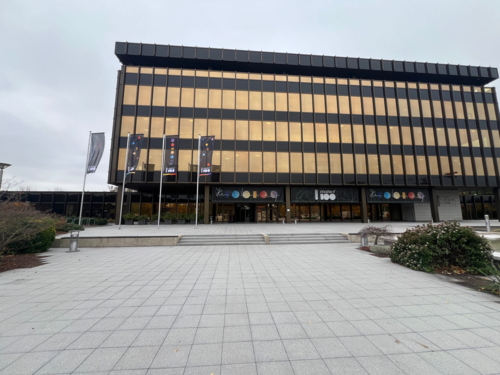
On November 7 and 8, 2025, around 80 historians, media scholars, computer scientists, and interested members of the public met at the Heinz Nixdorf MuseumsForum (HNF) to discuss the history of the computer in Germany and from Germany. The program ranged from labor and everyday history to corporate and environmental questions, as well as architectural and conservation perspectives on computers, showing how productive—but also challenging—the dialogue between the history of technology in a narrow sense and the social history of technology can be. The HNF and Martin Schmitt organized the conference.
The opening session made this tension clear. In the first slot on digital (in)justice, perspectives from labor history and administrative history took center stage—for example, on screen work and church IT—raising questions about how computers change rules, routines, and power relations within organizations. I presented insights from my project on municipal and state registers in West Germany: how, from the 1960s to the 1990s, digital infrastructures became quiet drivers of migration administration—and what that has meant for the welfare state and fundamental rights. The subsequent panels ranged from cybernetics and networking to corporate history, and finally to Zuse and Nixdorf. Here, the focus shifted to objects and architecture: how to preserve computers—and especially their plastic casings—so they could be tangible and comprehensible.
The venue itself was part of the story. The HNF presents Heinz Nixdorf as a pioneer of West German computer technology and tells the entrepreneurial and technological history of his company at the historic site of Germany’s former largest computer manufacturer. For a conference on computer history, this is a stroke of luck. At the same time, the location highlights certain ambivalences. After Nixdorf’s death at CeBIT in 1986, Nixdorf Computer AG entered a period of turbulence; in 1990, Siemens acquired a majority stake and merged it into Siemens Nixdorf Informationssysteme (SNI), a logo that can still be found today only on older ATMs. Parts of the company later became Wincor Nixdorf (banking and retail technologies), which was absorbed into Diebold Nixdorf in 2016. Narratives of success, crisis, and reinterpretation belong together here. The museum—located not by chance across from Paderborn’s “Zukunftsmeile,” with the Fraunhofer Institute and other research institutions—visibly balances these layers: it shows the end of the German computer industry, while also highlighting Paderborn’s efforts to reinvent itself as a hub of science and research.
In the discussions, a recurring “community problem” became apparent. Those coming from computer archaeology think in modules and components, speak the language of computing, and can draw on deep expertise when debating original condition and authenticity. Those coming from social, labor, or administrative history ask about inequality and everyday practices, and read computers as part of institutions, conflicts, and state modernization. Both perspectives are necessary; each has its own discourses and vocabularies—and that is precisely why the exchange was occasionally bumpy. When it worked well, it did so through concrete cases, such as Bernd Holtwick’s talk on workplace screen protection, which bridged ergonomics and trade unions. Here, it became tangible how hardware history and social history can be brought together.
For the German-speaking community, a conference like this is particularly valuable. First, because it takes regional narratives seriously, as Malte Thießen’s keynote on the digital transformation of the Ruhr region—with its particular dynamics—made clear. East German computer history also received attention, with Johannes Kleinmann’s talk on the computerization of East German steelworks and Felix Hermann’s presentation on “Red Computers” and the Unified System of Electronic Computing in the GDR. Second, because it brings together materiality and impact: without artifacts and their reconstruction, much remains abstract; without social contexts, artifacts remain mute. Paderborn was the right place for such a conference. The HNF maintains a substantial technical depth while also inviting reflection on the society of the computer, on work, administration, and social change. The conference did not always manage this balancing act effortlessly, but that was precisely where its epistemic value lay: between circuit board and everyday life lies the real terrain of the history of a “digital society.”